

Director
Olena Hankivsky
Dr. Olena Hankivsky (Professor of Public Policy; Director, Institute for Intersectionality Research and Policy, Simon Fraser University) is trained as a political scientist and is a recognized expert in gender mainstreaming and intersectionality-based analysis. Dr. Hankivsky has 20+ years’ experience working across academic, government, NGO and international organizations. Her most recent edited collection was the Palgrave Handbook of intersectionality in Public Policy with Dr. Julia Jordan Zachery (2019).

Associate Director
Gemma Hunting
Gemma Hunting is a PhD student in Interdisciplinary Studies at Simon Fraser University and a health equity consultant. Much of her work has focused on the value-added of intersectionality and other critical approaches including cultural safety to promote equity and social justice within health research, policy and practice. She has consulted for national and international government bodies, organizations, and universities, including: WHO, the International Institute for Global Health (UN University), UN Women, the National Collaborating Centre for Determinants of Health in Canada, the Canadian Centre on Disability Studies, and the Public Health Agency of Canada. Her current PhD project looks at the value added of applying intersectional and decolonizing approaches in medical education.
Who We Are
IBPA Framework Team

Natalie Clark
Natalie is a Full Professor at Thompson Rivers University in the School of Social Work whose practice, teaching, activism, and research over the past 25 years have focused on violence against children, youth, families, and communities, and on healing and resistance rooted in trauma-informed and intersectional approaches. Informed by her Settler ancestry, kinship with Métis and Secwepemc Nations, and her roles as a parent, grandparent, academic, activist, and sexual abuse counsellor. Natalie’s work centres Indigenous families and communities, particularly the impacts of policy and colonial violence. She continues to practice as a violence counsellor and Indigenous girls group facilitator, and her nationally and internationally cited scholarship includes over 28 peer-reviewed publications on Indigenous intersectionality, GBA+, girls’ health, and critical trauma theory.

Olivier Ferlatte
Olivier Ferlatte is an Associate Professor at l’École de Santé Publique de l’Université de Montréal and a research scientist at the Centre de Recherche en Santé Publique (CRESP). His research focuses on the relationship between stigma, substance use, and mental health in 2S/LGBTQIA+ communities. He is a recognized expert in the application of syndemics theory and intersectionality to 2S/LGBTQIA+ health, and findings from his research have influenced the development of policies and programs aimed at improving the health of 2S/LGBTQIA+ people. His scientific work spans several methodologies (qualitative, quantitative, art-based methods, mixed approaches) and is driven by a strong interest in community engagement and the participation of those affected by health inequalities as research partners. He is the director of Qollab, a research lab focuses on addressing mental health inequities among 2S/LGBTQIA+ communities through interdisciplinary and community-driven research approaches. Dr. Ferlatte holds a Junior One salary award from the Fonds de recherche du Québec.

Alycia Fridkin
Alycia Fridkin is a queer, white Jewish settler living on the unceded homelands of the Musqueam, Squamish and Tsleil-Waututh Peoples in Vancouver, BC. Her areas of interest include addressing inequities through critical approaches to policy and education, and supporting communities in responding to social justice issues. She works as an anti-racism and equity facilitator, coach and consultant, with a focus on improving systems for Indigenous people. She is currently employed as a Lead Facilitator with Indigenous Health at the Provincial Health Services Authority in BC where she works collaboratively and creatively to address Indigenous-specific anti-racism in health care. Alycia has a Masters in Public Health from the University of Toronto, a PhD in Interdisciplinary Studies from the University of British Columbia, and is certified in transformational coaching and psychedelic integration.

Daniel Grace
Dr. Daniel Grace is an Associate Professor at the Dalla Lana School of Public Health, University of Toronto and Tier 2 Canada Research Chair in Sexual and Gender Minority Health. He is an internationally recognized medical sociologist who leads a mixed methods program of community-engaged research to advance the social, mental, physical, and sexual health of 2S/LGBTQ+ communities. His research into the everyday understandings of biomedical HIV prevention has informed community programs, health policy, and legislation at provincial, national, and international levels. Dr. Grace is Director of the Centre for Sexual and Gender Minority Health Research, Dalla Lana School of Public Health.

Sarah Rudrum
Sarah Rudrum is a Professor of Sociology at Acadia University and teaches in the area of Sociology of Health. She is currently researching health care provider responses to the climate crisis. Her book Global Health and the Village is an institutional ethnography of the role of global health on local health care settings drawing on a case study of maternity care in northern Uganda. She has also published on gender and sexuality messaging in campaigns for voluntary medical male circumcision in sub-Saharan Africa. During the early pandemic, Dr. Rudrum led two qualitative research studies soliciting online journals from participants, one focused on perinatal care and one focused on changes to working life.
For more, see: ORCID 0000-0002-7512-6914.
SFU Affilates

Julia Smith
Dr. Julia Smith is a transdisciplinary social scientist whose research contributes to public health policy and global health governance fields. She has worked with health and community development programs in Canada, Kenya, South Africa, Sierra Leone and the United Kingdom, and frequently works in consultation with government and civil society at both the local and global level. She is Associate Scientific Director of the Pacific Institute on Pandemics and Society and a member of the BRIDGE Research Consortium. Dr. Julia Smith’s research centres around the social, political and commercial determinants of health, often applying an intersectional feminist and critical political economy lens to better understand the relationships between health and other inequities. Julia is the author of Conscripted to Care: Women on the Frontlines of the COVID-19 Response and Civil Society and the Global Response to HIV/AIDS.

Alissa Greer
Dr. Alissa Greer (Associate Professor, School of Criminology, Simon Fraser University) is trained in public health (MPH, PhD) and a recognized expert in drug policy research internationally. She is an associate editor with the International Journal of Drug Policy and board member of the International Society for the Study of Drug Policy. She has 15+ years’ experience working at the intersection of policy, practice, and research as it relates to substance use and harm reduction. She specializes in qualitative research and community engaged methods for policy and research. Her practice is grounded in a commitment towards social justice and equity.

Parin Dossa
Dr. Parin Dossa, Professor Emeritus of Anthropology, received her education on three continents: Africa, Europe and North America. Her long-standing interest on displacement and critical feminist ethnography has led her to focus on the interface between social inequality, health, gender and social palliation. Based on her research on social suffering and narratives of trauma, Dr. Dossa explores the differential effects of structural violence on the lived realities of Muslim women: homelands and diasporas. She grounds her analysis in methodologies that capture the reconstitution of lives on the margins of society. This orientation questions the conceptualization of the local and the everyday as discrete from the body politic, paving the way for presenting an alternative view of the margins as sites for the making of a just world.

Siyuan Yin
Siyuan Yin is an Assistant Professor at the School of Communication at Simon Fraser University. Yin's research spans the fields of feminist media studies, cultural studies, political economy, and social movements. Her book Contesting Inequalities: Mediated Labor Activism and Rural Migrant Workers in China was recently published by Stanford University Press. Yin's work has also appeared in leading journals such as Capital & Class, Cultural Studies, New Media & Society, and Feminist Media Studies, among others. Her current projects address feminist movements and gendered popular culture.

Jeannie Morgan
Jeannie Morgan, PhD, is an Assistant Professor in Indigenous Studies and Labour Studies at Simon Fraser University, and an associate faculty of Gender, Sexuality, and Women’s Studies, and Sociology and Anthropology. A member of the Nisga’a Nation, she is the first First Nations person to earn a PhD in Sociology from UBC. Her research focuses on the social and structural determinants of health for Indigenous peoples, Indigenous governance and policy, and the intersections of Indigeneity, race, class, and gender, using critical decolonizing methodologies and community-based research. Dr. Morgan is a co-applicant on the SSHRC-funded “Understanding Precarity in BC” project and has held a CIHR grant as a co-primary investigator. She has led or collaborated on research for the First Nations Health Authority, Nisga’a Lisims Government, and Aboriginal Head Start in Urban and Northern Communities. Dr. Morgan has served on the Nisga’a Valley Health Authority Board, the CIHR Indigenous Health Research committee, SFU’s Equity Diversity and Inclusion Advisory Council, and is a member of the CIHR College of Reviewers.

Mei Fang
Dr. Mei Lan Fang is an Assistant Professor in Urban Aging at Simon Fraser University, jointly appointed in the Urban Studies program and the Department of Gerontology. She also serves as the Undergraduate Chair for the new BA in Urban Worlds program. Dr. Fang is a Visiting Scholar at the School of Health Sciences at the University of Dundee, Scotland. Her research uses community-based participatory methods to co-create inclusive and healthy environments that support aging in place. She develops theoretical and methodological frameworks that guide the design of climate-resilient, age-friendly cities. Central to her work is ensuring that older adults are active contributors to climate resilience, drawing on their lived experience to build more just and sustainable communities.

Joao Luiz Dornelles Bastos
João Luiz Bastos is a social epidemiologist whose research focuses on the measurement and health impacts of racism, with particular attention to intersectional health inequities. He leads studies that integrate critical theory with quantitative and mixed-methods approaches to examine discrimination as a determinant of health. His current projects engage with marginalized communities in Brazil and Canada and explore strategies for equity-oriented health research.
For more, see:
https://www.sfu.ca/fhs/about/people/profiles/joao-bastos.html

Erin Flanagan
Erin Flanagan is a PhD candidate in the Faculty of Health at York University, where her research focuses on the intersections of health equity, climate change, and governance. Grounded in a commitment to social and environmental justice, her work critically examines how structural, institutional, and ideational factors influence policy responses to planetary health challenges. She is particularly interested in advancing equity-centered approaches that address the root causes of health and environmental inequities.

Megan Mattes
Megan Mattes is a PhD Candidate in the Department of Political Science at Simon Fraser University. Prior to her doctoral studies, Megan completed her Master of Public Policy at University of Toronto's Munk School of Global Affairs and Public Policy. Her research focuses on political participation with an emphasis on deliberative processes and local government.

Haniel Sorensen
Haniel Sorensen (he/him), is a master's candidate from Carleton University's Institute of Political Economy. He is a detail-oriented, critical and passionate community advocate with a strong background in researching, synthesizing, writing, editing, and collaboration. Through his work, he hopes to help develop and contribute to the shared good of the human and more-than-human community—fostering a more robust and inclusive sense of love, care, and justice for all!
IIRP Research Assistants

Nadia Abdilla
Nadia Abdilla is the Equity Coordinator at the University of Malta’s Equity Office. She holds a Bachelor of Arts (Hons.) in Philosophy and a Master of Arts in Sociology, both awarded by the University of Malta. She is currently reading for a Ph.D. with the Department of Gender Studies and Sexualities with the University of Malta and her research focuses on money-management and financial decision-making practices in marriage. She acted as Secretary to the Technical Committee for the Strengthening of Democracy which was tasked with the Gender Balance in Parliament Reform. Abdilla also curated an exhibition 'Tracing the Path of Women in Politics' which was inaugurated at the Parliament of Malta in 2019. She currently forms part of a working group responsible for the setting up of a Women's Archive at the University of Malta. Abdilla is also a published children’s book author with one of her first publications being among the finalists for the National Book Prize 2024.
For more, see:
https://www.linkedin.com/in/nadia-abdilla-49b349a1/
Ginette Azcona
Ginette Azcona is a Senior Research & Data Specialist at UN Women (currently on sabbatical) and Visiting Policy Practitioner Fellow at the School of Public Policy and Global Affairs, UBC. She is a leading expert on gender, data, and the SDGs and lead author of UN Women’s flagship report, Progress on the Sustainable Development Goals: The Gender Snapshot.
For more, see:
https://www.linkedin.com/in/ginette-azcona
https://sdgs.un.org/panelists/ginette-azcona-46217

Claire Azzopardi Lane
Claire Azzopardi Lane, Ph.D. is an academic in the Department of Gender and Sexualities within the Faculty for Social Wellbeing at the University of Malta. She has a specific interest in the intersection between gender, sexualities and disability. Her lecturing and supervision portfolio include topics related to sexual and reproductive health and rights, sex education and sexual and gender diversity.
For more, see:
https://www.um.edu.mt/profile/claireazzopardilane
https://orcid.org/0000-0001-7564-0414

Donna Baines
Donna Baines is a Professor of Social Work at the University of British Columbia. Prior to UBC, she was professor at University of Sydney and McMaster University. She researches and teaches in paid and unpaid care work, decolonizing and anti-oppressive theory and practice, and non-profit social services.
For more, see:
https://socialwork.ubc.ca/profile/donna-baines/

Nicole Bernhardt
Nicole Bernhardt is an Assistant Professor in Political Science at the University of Toronto, Scarborough. Her research focuses on human rights policy as a response to structural racism. She received her PhD in Politics from York University for which she was awarded the Abella Scholarship for Studies in Equity. Nicole has worked as a policy advisor for the Ontario Anti-Racism Directorate and as a human rights officer for the Ontario Human Rights Commission.
For more, see:
http:/www.nicolebernhardt.com/

Fredrik Bondestam
Fredrik Bondestam is an Associate Professor in Sociology at Uppsala University and the Director of the Swedish Secretariat for Gender Research at the University of Gothenburg. His research covers organizational change in higher education and research, feminist pedagogy, gender-based violence and harassment, risk and masculinities, and gender mainstreaming in theory and practice.
Fredrik has managed government assignments on gender mainstreaming in SE 2013-2017 and currently participates in several EU-funded Horizon2020-projects on gender-based violence in the ERA (UniSAFE, GENDERACTIONplus, GenderSAFE).

Lisa Bowleg
Lisa Bowleg, PhD, MA, is a leading applied social psychologist and expert in intersectionality and health equity, serving as Professor of Applied Social Psychology at George Washington University and Founder and President of the Intersectionality Training Institute.
With over 25 years of experience teaching qualitative research, she is currently teaching a doctoral-level course she deeply enjoys. Her NIH-funded, intersectionality-informed mixed methods research focuses on the impact of structural stressors and stigma on the health of diverse Black men in the U.S.
She has published widely in top journals such as American Psychologist and AJPH, where she is also an associate editor and editor of the Perspectives from the Social Sciences section. Her recent honors include GW’s 2021 Trachtenberg Prize, the 2021 Lawrence W. Green Paper of the Year Award, and NIMH’s 2023 James S. Jackson Memorial Award.
For more, see:
https://www.intersectionalitytraining.com/

Dr. Jade Boyd
Dr. Jade Boyd is an Associate Professor in the Division of Social Medicine at the University of British Columbia and a Research Scientist with the British Columbia Centre on Substance Use (BCCSU). She draws upon qualitative, ethnographic and community-based methods to examine social, structural and environmental factors that impact people who use drugs. Dr. Boyd co-leads the BCCSU’s Qualitative and Community-Based Research field office where she collaborates with local and national peer-based, drug user-led groups, as well as leads a program of community-based research activities investigating intersecting drivers of harm among women.
Teresa del Amo Busto
Teresa del Amo Busto is a public servant focused in equality and non-discrimination policies with an intersectional perspective. In 2008 and 2009, she was the manager coordinator of the project "Connected Equalities: Intersectionality in Local Policies" in Terrassa's City Council, where she has been in charged of the strategy to maintream intersectionality in local policies. She has also collaborated with research groups such as the Center for Interdisciplinary Gender Studies at the Universitat de Vic and the Immigration and Ethnic Minorities Study Group at the Universitat Autònoma de Barcelona (Spain).

Amy Camilleri Zahra
Dr Amy Camilleri Zahra is a Lecturer and Head of Department of the Department of Disability Studies, Faculty for Social Wellbeing at the University of Malta. Amy graduated from the University of Malta with a Bachelor of Psychology degree (First Class Honours) in 2011 and then went on to obtain a Master of Arts degree in Disability Studies (Distinction) at the University of Leeds, United Kingdom. She completed her Ph.D. in November 2023. Her Ph.D. looked at the social representations of disabled women in Malta. Amy’s research interests include gender and disability, disability policy and social and cultural representations of disability. Prior to joining the University of Malta, Amy worked as a Manager at the Commission for the Rights of Persons with Disability and was in charge of the monitoring, protection and promotion of the United Nations Convention on the Rights of Persons with Disabilities. Amy Camilleri Zahra has been a disability rights activist for the past 18 years and has been appointed to a number of committees and has been involved in a number of organisations, including one she co-founded herself.

Catia Cecilia Confortini
Catia Cecilia Confortini is a Professor of Peace and Justice Studies at Wellesley College. She holds a Master’s Degree in International Peace Studies from the University of Notre Dame (Indiana) and a PhD in International Relations from the University of Southern California (Los Angeles). Her writings explore the contributions of women's peace activism to peace studies and feminist the origins of peace and violence.
For more, see: https://www.catiacc.net/

Christian D. Chan
Christian D. Chan (he, him, his), PhD, NCC is an Assistant Professor in the Department of Counseling and Educational Development at The University of North Carolina at Greensboro and a proud Queer Person of Color. His interests revolve around intersectionality and the effects of oppression on career development and access to counseling. Dedicated to mentorship for leaders and scholars, he has actively contributed to over 80 peer-reviewed publications in journals, books, and edited volumes and has conducted over 150 refereed presentations at the national, regional, and state levels. He currently serves as Associate Editor for Teaching and Supervision in Counseling.
For more, see:
https://www.uncg.edu/employees/christian-chan/
https://www.researchgate.net/profile/Christian-Chan

Mayurakshi Chaudhuri
Dr. Mayurakshi Chaudhuri is an Associate Professor of Sociology and Digital Humanities, Area Chair of Sociology and the Head of the Department of Social Sciences in the FLAME School of Liberal Education at FLAME University, Pune, India. Dr. Chaudhuri's research areas include Migrations and Mobilities, Gender Studies, Historical Sociology, Technology and Society, Digital Humanities, and Qualitative Research Methods. Dr. Chaudhuri is an Associate Editor with the top-tier journal Frontiers in Sociology (Section: Migration and Society). She is the Founding Faculty of Digital Humanities programs (M.Sc. and Ph.D) at IIT Jodhpur, and currently serves as a member of the Board of Studies in Digital Humanities for Savitribai Phule Pune University, India. Dr. Chaudhuri is the recipient of international and national fellowships and has completed two online teaching projects as part of the Government of India's Ministry of Education's Direct To Home initiative (DTH): (1) Gender & Society (2018), and (2) Images, Imaginations and Cultures (2023).
For more, see:
https://sites.google.com/flame.edu.in/mayurakshi-chaudhuri/home

Jane Chen
Jane Chen is the daughter of Hokkien-Chinese immigrants, born and raised as a settler on unceded Wurundjeri lands (more commonly known as Melbourne, Australia). She is currently a PhD candidate at the University of Melbourne, where she is exploring how intersectionality is being understood and applied in policymaking by public servants in the state of Victoria. Professionally, she is herself a public servant working in social policy, with expertise in gender equality, multicultural affairs, and strategic planning. She is also a writer, public speaker and non-executive director, and has held various advocacy and advisory roles across the youth and multicultural sectors.
For more, see:
www.janechen.me

Ashlee Christoffersen
Dr Ashlee Christoffersen (she/her) is an Adjunct Professor in the Department of Politics at York University, and an Associate of its Centre for Feminist Research. Her research is concerned with the operationalization of the Black feminist theory of intersectionality in equality policy and practice: its influence and possibilities, as well as the discursive and material resistance it faces. She is currently Co-Principal Investigator (together with Orly Siow) of a major project investigating race, gender and relationships between civil society and the state in three countries, funded by the Swedish Research Council. She is the author of The Politics of Intersectional Practice: Representation, Coalition and Solidarity in UK NGOs(Bristol University Press) and her work has been published widely in leading journals, including Politics & Gender, European Journal of Politics & Gender, Policy & Politics, West European Politics, and Social Politics. She holds a multi-award-winning PhD in Social Policy (University of Edinburgh) and an MA in Gender Studies (SOAS, University of London), and also consults internationally on intersectionality for clients including the International Institute for Sustainable Development and Climate-KIC.

Nancy Clark
Nancy's research is informed by social justice, intersectionality and equity-oriented health policy. Her research area focuses on intersecting determinants of mental health of immigrants and refugees and people who experience forced migration. As a first-generation immigrant from Palestine and the former Yugoslavia, racialized nurse and interdisciplinary scholar, Nancy comes to this work with a deep commitment to improve barriers to healthcare services and to promotion f culturally safe mental health care for groups who may experience structural vulnerability as a result of their migration status; to promote inclusion of intersecting determinants of mental health for policy and practice.

Annelies Coessens
Annelies Coessens (she/her) is a dedicated advocate for gender equality, diversity and inclusion. She is a Policy Officer at the Council of European Municipalities and Regions (CEMR) in Brussels. Her current policy and advocacy work focuses mainly on combatting violence against women in politics. With experience across EU institutions, international NGOs, and grassroots campaigns, Annelies brings a multi-level approach to advancing inclusive policymaking. Her academic background includes an MSc in Development and International Relations with a specialization in Global Gender Studies, and an MSt in Diplomatic Studies from the University of Oxford. She is also a published writer on women in diplomacy, online safety, and peace building.

Gerard Coll-Planas
Gerard Coll-Planas, PhD in sociology from the Autonomous University of Barcelona and full professor at the University of Vic, where he has directed the Center for Interdisciplinary Gender Studies (2014-2024). He has published the books Illustrating Gender (Egales, 2013), La carne y la metáfora [The Flesh and the Metaphor] (Egales, 2012) and La voluntad y el deseo [Will and Desire] (Egales, 2010). He was the academic coordinator of the project 'Connected Equalities. Intersectionality in local public policies', and co-PI of ''Polyhedral perspectives on gender violence: proposals for prevention in secondary schools from an intersectional perspective'. He is currently coordinating the project 'Zoom out. Approaching children's literature from an intersectional perspective' and participates in 'InterHEd: Intersectionality in Higher Education', both co-funded by the European Commission.

Sheelagh Daniels-Mayes
Associate Professor Sheelagh Daniels-Mayes is a Gomeroi woman who has low vision. Located at the University of Melbourne she lectures in Indigenous Studies, and is Deputy Associate Dean, Diversity and Inclusion – Disability, at the Faculty of Arts. Sheelagh is the Chief Investigator of a Discovery Indigenous Australian Research Council grant titled, 'Improving Life Outcomes for Indigenous People Living with a Disability: Lessons from Australia's Universities'. This is a multidisciplinary team investigating the lived experiences of Indigenous staff and students with disability at Australian universities. She is developing a framework referred to as BlakAbility, a culturally-safe and disability-confident approach to policy and practice. Her research expertise includes sociology of racism, Critical Indigenous Studies, Critical Disability Studies, climate justice and intersectionality. Sheelagh’s scholarship draws on previous studies of education, psychology, sociology and criminology. Prior to entering academia, Sheelagh worked for and with government and community agencies tackling a diversity of human rights issues.
For more, see:
https://findanexpert.unimelb.edu.au/profile/948837-sheelagh-daniels-mayes
BlakAbility:
https://blogs.unimelb.edu.au/blakability/

Serena D’Agostino
Dr. Serena D’Agostino is a Senior Researcher in Political Science at the Politics and Public Governance research group at the University of Antwerp, as well as a Senior Associate Researcher at the Centre for Migration, Diversity and Justice at the Brussels School of Governance (BSoG), Vrije Universiteit Brussel. Her research interests lie at the crossroads of (political) intersectionality, activism/social movements and minority politics and rights, with a focus on Romani politics, Romani feminism and Roma rights in Europe. She is the co-editor, alongside Nadia E. Brown, of "Intersectional (Feminist) Activisms: Global Practices and Experiences" (Routledge, 2024). Her work has been published in the European Journal of Politics and Gender, the International Feminist Journal of Politics, the Journal of Diversity and Gender Studies, the Journal of Women, Politics & Policy, and Politics, Groups, and Identities, among others.
For more, see:
https://www.uantwerpen.be/en/staff/serena-d-agostino_26605/
Website:
https://researchportal.vub.be/en/persons/serena-dagostino
LinkedIn:
https://www.linkedin.com/in/serena-d-agostino-phd-6197011b/
ORCID:
https://orcid.org/0000-0002-1990-8516

Reham ElMorally
Dr. Reham ElMorally is a gender and politics specialist in the MENA region, serving as Head of Public Policy and Research at Entlaq, where she leads multidisciplinary teams in evidence-based policy design and research on entrepreneurship, technology, and sustainability. She is also an Assistant Professor at the American University in Cairo, integrating practical methodologies into global affairs and public policy curricula. An editor for Lived Places Publishing and author of Recovering Women’s Voices (2024), Dr. ElMorally holds a PhD from the University of Reading and degrees from UCL and Cambridge. She is a multilingual scholar and thought leader committed to decolonizing knowledge and policymaking, with numerous publications and contributions to international policy dialogues.
Julia Maria Espinosa Fajardo
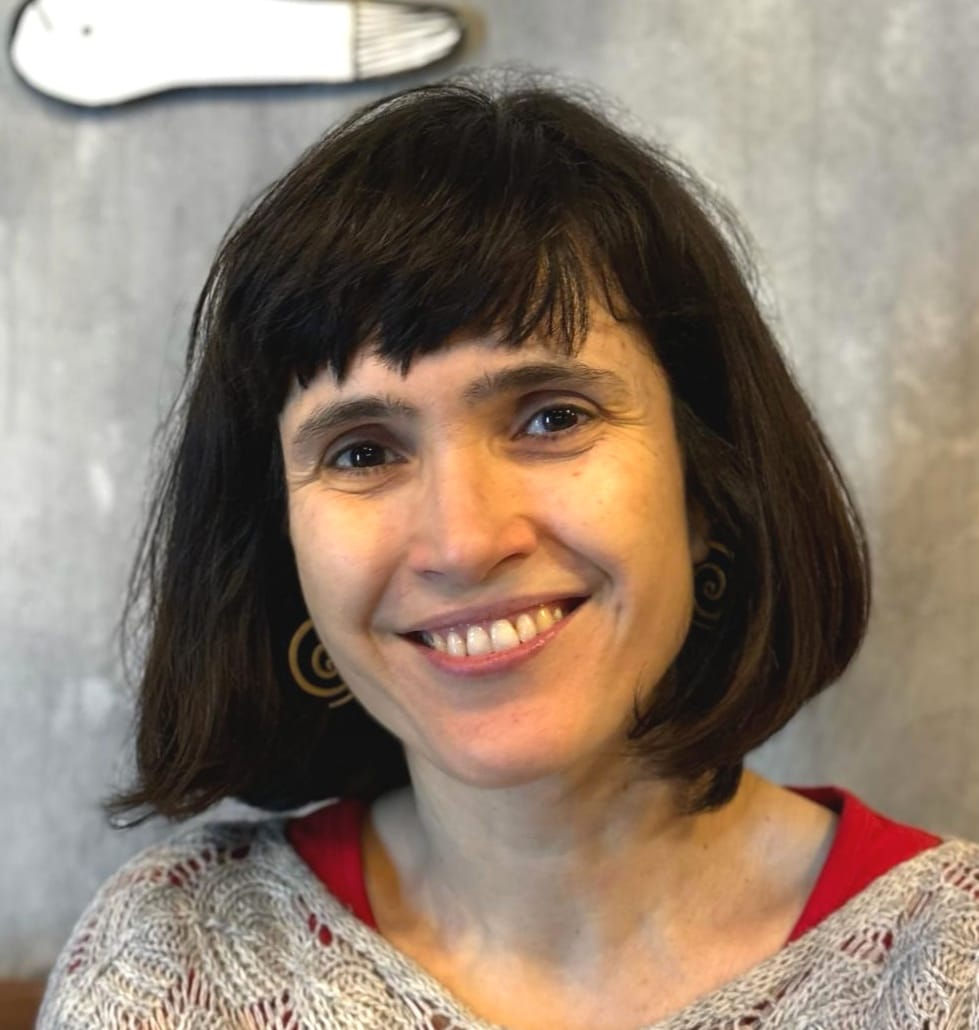
Sociologist with a PhD in Political Science (Complutense University, Madrid – Spain). Since 2003, she has worked as a professor, researcher, evaluator, and expert in public policy, gender equality, and intersectionality in Europe and Latin America. Her work specifically focuses on research implementation processes and evaluation methodologies to capture and promote social change.
For more, see:
https://departamento.us.es/sociologia/management-administration-and-staff/
.png)
Cole Etherington
Cole Etherington, PhD is a sociologist and Senior Research Associate at the Ottawa Hospital Research Institute. Cole’s research focuses on integrating intersectionality considerations in knowledge translation and implementation science.
Christine (Tina) Fahim
Dr. Fahim (PhD, MSc) is a Scientist in the Knowledge Translation Program, St. Michael’s Hospital and leads the Team for Implementation, Evaluation and Sustainability. She is an Assistant Professor in the Institute of Health Policy, Management and Evaluation at the University of Toronto and an Associate Scientist in the Department of Health Policy and Management at the Bloomberg School of Public Health, Johns Hopkins University. Dr. Fahim’s research focuses on the science and practice of knowledge translation to implement evidence-based interventions at the provider, organization, and health systems levels.
For more, see:
https://www.knowledgetranslation.net

Tammy Findlay
Tammy Findlay is a Professor in the Department of Politics, Economics, and Canadian Studies at Mount Saint Vincent University. Her research focuses on feminist intersectionality and social policy, child care policy, women’s representation and democratic governance. She is the author of the book, Femocratic Administration: Gender, Governance and Democracy in Ontario (2015) and co-author of Women, Politics and Public Policy: The Political Struggles of Canadian Women, 3rd ed. (2020). She is a research associate with the Canadian Centre for Policy Alternatives Nova Scotia and is Past-President of the Canadian Research Institute for the Advancement of Women.

Raissa Fontelas Rosado Gambi
Raissa Fontelas Rosado Gambi is a Brazilian social scientist and public servant with a strong academic background, holding a master's degree in Public Administration and a doctorate in Social Sciences. With more than 15 years of professional experience, she has held various roles in the public sector and consultancy, focusing on social policy, project management, and community engagement, as well as research and teaching. Since 2016, she has worked as a Senior Public Policy Analyst at the Municipality of São Paulo, and over the last 5 years, has faced the challenges of coordinating and integrating sectoral policies within the scope of early childhood policy. In 2023, she was a Policy Practitioner Fellow at the School of Public Policy and Global Affairs (SPPGA) at the University of British Columbia (UBC), where she delved deeper into intersectionality and how to foster it in the context of early childhood policies in Sao Paulo and Brazil.
For more, see:
https://www.linkedin.com/in/raissa-fontelas-r-gambi-4247bb266

Simona Getova
Simona Getova is a decolonial feminist political ecologist, climate justice organiser, facilitator, and educator from North Macedonia. Simona’s organizing lies in the intersections of decolonial feminist political ecology and community-led resistance and models of social and environmental justice. Simona researches the role of intersectional and decolonial feminist praxis in initiatives for desired eco-social transformation within the Department of Political and Social Sciences of Universtat Pompeu Fabra in Barcelona, Spain. Simona currently works as the Director of Operations at Research and Degrowth International, and teaches intersectional feminist, political ecology and degrowth-related topics at several master’s programs. Simona dreams of collective liberation and prosperity through the dismantling of systems of oppression and extraction, and the prefiguring of just, joyful, climate-safe futures.

Anna Gkiouleka
Anna Gkiouleka (gyoo-le-ka) is a multidisciplinary social scientist with a PhD in Sociology from the University of York and a background in psychology and migration studies. Her research focuses on health inequalities, with a particular interest in applying intersectionality-informed approaches to understand how structural and institutional power dynamics shape health disadvantage. She is currently based at the University of Strathclyde Glasgow, as a Research Associate at the ESRC Centre for Lifecourse Health Equity (Equalise), where she conducts mixed-methods research and supports citizen-led approaches to policy development.
For more, see:
https://www.linkedin.com/in/annagkiouleka/
https://departamento.us.es/sociologia/management-administration-and-staff/

Greer Lamaro Haintz
Dr Greer Lamaro Haintz is a Senior Lecturer in Public Health at Central Queensland University. She has expertise in community-based qualitative research, drawing on theories of gender and intersectionality, and applying intersectionality and ethnographic frameworks. Her practice and research interests are in the intersections of culture, ethnicity, women's sexual and reproductive health, and social inclusion, with a particular interest in populations with lived experiences as refugees. She has co-led a program of work exploring the influences on women's reproductive decision making, including a focus on policy influences.

Ange-Marie Hancock
Ange-Marie Hancock is Executive Director of the Kirwan Institute for the Study of Race and Ethnicity at The Ohio State University, where she also serves as ENGIE-Axium Endowed Professor of Political Science. Dr. Hancock joined Kirwan in January 2023 after 15 years at the University of Southern California and previous positions at Yale University, Penn State, and the University of San Francisco.

Linda Henderson
Linda Henderson is an expert in intersectionality and Gender-Based Analysis Plus (GBA Plus), with 15 years of experience leading this work in the federal government. She is currently a senior policy analyst and learning advisor at Health Canada, where she provides strategic leadership in the application of intersectional GBA Plus. Her work includes shaping policy, training, and capacity-building to enhance equity-focused decision-making across the department. Before joining Health Canada in 2016, Linda spent six years at Women and Gender Equality Canada, where she led GBA Plus initiatives, developed GBA Plus training, and advised federal departments on integrating GBA Plus into their policies and programs.
Prior to her work in government, Linda had a 25-year career in international development, focusing on gender equality, sustainable development, and intercultural training.

Ngozi Iroanyah
Ngozi Iroanyah is the Director of Health Equity and Access for the Alzheimer Society of Ontario, and a PhD student at York University focusing on intersectionality and the experiences of Black Older Adults with dementia in Toronto.
Anthony Isiwele
Anthony Isiwele is a graduate researcher at University College London (UCL), IOE, UCL's Faculty of Education and Society, in the Social Research Institute (SRI). He is also a Lecturer (AHEF), teaching courses in Health and Social Care. Anthony is a registered Social Worker with Social Work England, with research interests in young Black people’s mental well-being. His research, which aims to develop culturally sensitive mental health frameworks, has received recognition, including ethical approval from the NHS, an innovation grant from the NIHR and a Research Impact Fellowship award. Anthony has been invited to speak at international conferences, including the European Society for Health and Medical Sociology (ESHMS) and the Association for Child and Adolescent Mental Health (ACAMH).

Aditi Iyer
Aditi Iyer is a equity-oriented public health professional with a multi-disciplinary academic background that includes a PhD in Public Health (University of Liverpool), a Masters’ of Arts in Social Work (Tata Institute of Social Sciences, Mumbai), and a Bachelors of Arts in Sociology (University of Bombay). She was a Goran Sterky Fellow at the Division of International Health Care Research, Department of Public Health, Karolinska Institutet, Stockholm, and Fellow of the University, School of Population, Community and Behavioural Sciences, University of Liverpool.
Aditi engages in research, teaching, knowledge translation and policy development with a strong focus on gender and its intersections with other sources of power and inequality. Her research interests include health and wellbeing over the life course, maternal safety and rights, respectful maternity care, ageing, health and health systems in urbanising societies, and the development of equity-promoting research methodologies and field strategies. She is a contributor to an online course on Gender Equity and Intersectionality in Health Policy and Systems for WHO’s Alliance for Health Policy and Systems Research.
For more, see: https://phfi.org/member/dr-aditi-iyer/

Ericka Johnson
Ericka Johnson is a Professor of gender and society, Linköping University, Sweden and director of the Swedish national graduate school for the Wallenberg AI, autonomous systems and software program – Humanity and Society. She has an interdisciplinary background in sociology, gender studies, and science & technology studies. Johnson is the author of several monographs and anthologies, including A Cultural Biography of the Prostate (MIT Press 2021) and editor of How that Robot Made Me Feel (MIT Press 2025), and the recent Big Data & Society article (with Lee & Hajisharif) ‘The Ontological Politics of Synthetic Data’, in which she details intersectional hallucinations. She is a member of the Royal Swedish Academy of Sciences.
Amélie Keyser-Verreault
Dr. Keyser-Verreault, postdoctoral fellow at the university of Tübingen, is an anthropologist researching body politics and gender with a focus on the family, migration and resistance in East Asia. She also has a deep interest in qualitative art-based, decolonial and intersectional methodologies. Her work has appeared in academic journals including the Journal of Gender Studies, Feminism and Psychology and The Gerontologist.

Hannah Kia
Hannah Kia is an Associate Professor at the University of British Columbia’s School of Social Work. Her current program of research addresses a variety of issues pertaining to sexual and gender minority (SGM) populations. Hannah’s work centres, in particular, questions related to SGM health, aging in SGM communities, as well as social work and other professional practice with SGM groups. In recent years, her program of research has included intersectional inquiry on trans and gender-diverse (TGD) people’s peer support experiences, and on the healthcare and social service experiences of TGD older adults.
For more, see:
https://socialwork.ubc.ca/profile/hannah-kia/

Kerri Klein
Kerri is a process designer, facilitator, and strategist whose work focuses on the intersection of climate resilience, equity, and health. She specializes in designing collaborative and participatory processes that centre the voices and leadership of those most impacted by climate change, with a particular emphasis on intersectionality and structural inequities. Through her consulting practice, she partners with governments, nonprofits, and academic institutions to co-create strategies, learning opportunities, and engagement processes that advance just and transformative climate action. Her recent work includes supporting mental health climate resilience, leading equity-informed climate risk assessments, and leading processes to support health system transformation for sustainability and climate action. Kerri brings a deep commitment to equity-driven systems change, grounded in collaboration, care, and learning. She is based in Victoria, BC.
For more, see:
https://shiftcollaborative.ca/

Jillian LeBlanc
Jillian is an internationally recognized intersectional feminist, decolonial legal academic, and experienced policymaker currently based in Paris. She previously spent over a decade in Ottawa on the unsurrendered territory of the Anishinaabe Algonquin People, advancing gender equality through work in government, non-profits, and politics. Holding an LLM in Gender Studies and Law from London, her scholarship explores decolonizing international law, critiquing white supremacy in feminism, feminist legal interpretations of war, and migration ecosystems. Raised on the unceded territories of the Tsimshian, Gidimten Clan, and Witsuwit'en Peoples in northern Canada, Jillian is fluently bilingual in English and French.
Leah Levac
Leah is a community engaged researcher whose collaborations focus on intersections between wellbeing and public engagement, and the framing and development of public policy, both at the municipal level, and federally in relation to resource extraction. She has been involved in several research projects about the intersectional impacts of public policies, and about possibilities for advancing more just policy processes and outcomes. She teaches courses in community engagement, public policy, and political participation. Before moving to Guelph, Leah served as a city councillor in Fredericton, NB.
For more, see:
https://polisci.uoguelph.ca/people/leah-levac
Dr. Muriel Mac-Seing
Muriel Mac-Seing is an Assistant Professor of Global Health in the Department of Social and Preventive Medicine at the School of Public Health of the Université de Montréal (ESPUM) and a Research Associate at the Université de Montréal’s Research Centre of Public Health (CReSP). As a global public health practitioner-researcher, her work focuses on sexual and reproductive health rights and climate change, particularly for people with disabilities and other populations in situations of vulnerability, through the lens of intersectional equity, structural determinants of health (governance, policy, leadership), and epistemic justice. She is one of the co-founders of Women in Global Health Canada and leads the Lab Solidarités Global Health.
For more, see:
www.linkedin.com/in/muriel-mac-seing-06268138

Marina Morrow
Marina Morrow is a Professor at the School of Health Policy and Management in the Faculty of Health at York University and the Director of the Mad Studies Hub. In her research she uses mad studies and critical mental health approaches to better understand the social, political, and institutional processes through which mental health policies and practices are developed and how social and health inequities are sustained or attenuated for different populations. She has developed novel intersectional approaches and academic-community engagement models that have been translated into mental health policy and practice in Canada and internationally.
Lin Mussell
Lin Mussell is a Lecturer in Political Science and International Relations at the University of Canterbury, Aotearoa New Zealand. Her work focuses on carceral politics, policies, and institutions. She has a forthcoming book with University of British Columbia Press on intergenerational legacies of carceral policy in Aotearoa, Australia, and Canada, which features use of critical, Indigenous-grounded, and intersectionality-based policy analysis.
Noorin Nazari
Noorin Nazari (she/her) is a Learning Advisor at the Canadian Foreign Service Institute, Global Affairs Canada where she designs and facilitates trainings on issues pertinent to diversity, inclusion, and equality to a wide range of participants from Federal Government and Canadian missions abroad to non-governmental organizations. Nazari has accomplished her PhD in Cultures, Societies and Languages stream of Adult Education at the University of Ottawa, master’s degree in International Development at Duke University, and bachelor with honours in Public Affairs and Policy Management at Carleton University. Nazari’s interest in intersectionality has been demonstrated in her peer reviewed publications and a personal commitment to equality as an uncompromisable social value.

Dr. John Oliffe
Dr. John Oliffe is a Professor and Tier 1 Canada Research Chair in Men’s Health Promotion at the School of Nursing, University of British Columbia. He is the founder and lead investigator of The Men's Health Research Program at UBC. His work focuses on masculinities as it influences men’s health behaviours and illness management, and its impact on partners, families and overall life quality. His study findings have been used to advance men’s health promotion in the areas of psychosocial prostate cancer care, smoking cessation and male suicide prevention.
For more, see:
www.menshealthresearch.ubc.ca.
Stephanie Paterson
Stephanie Paterson is a Professor in the Department of Political Science at Concordia University. She specializes in feminist policy studies, with focus on feminist and critical frameworks and feminist governance, particularly gender/intersectionality mainstreaming.

Maria Pisani
Prof. Maria Pisani (she/her) is an academic and an activist. She is presently the Head of Department of the Department of Youth, Community and Migration Studies, University of Malta. As a critical, intersectional feminist, Maria’s activism is informed by her academic work; she is unapologetically political and seeks to support spaces that give voice to otherwise marginalized voices. Her practice is grounded in a commitment to social and ecological justice.

Isabel B. Rodrigues
Isabel B. Rodrigues is a CIHR postdoctoral fellow in the Department of Community Health Sciences at the University of Manitoba. Her research focuses on co-designing interventions to improve mobility and quality of life among diverse older adults living with osteoporosis and frailty using a collaborative, user-centric approach.
Shinya SADAKA
Shinya SADAKA is a Designated Assistant Professor at the Center for Gender Diversity, Nagoya University, Japan. His research focuses on gender and politics, feminist institutionalism, and normative feminist political theory. His current work explores how feminist institutionalism can be connected with normative feminist theory to develop “Feminist-Institutionalist Political Theory.” He is also interested in promoting gender equality within university organizations.
For more, see:
https://researchmap.jp/shinya.sadaka?lang=en

Sabrina Saase
Psychologist and researcher, Health & Well-being Manager at the international university ESCP Berlin including counselling, DEI, health strategy and campaigns among other tasks. Work Experience in psychotherapy, psychiatric clinics, United Nations, NGOs, educational work e.g. training multipliers, university teaching, scientific advisory boards, mentoring programmes. Additional training in Peace & Conflict Management (Oxford).
For more, see:
https://de.linkedin.com/in/sabrinasaase

Leyla Shahid
Leyla has worked for over 13 years in equity, diversity and inclusion mainstreaming, within the areas of policy analysis, strategic engagement and learning facilitation with federal, provincial, and municipal governments in Canada, intergovernmental organizations, and international and domestic civil society organizations. Leyla values emotional literacy and lived experiences, and centres intersectionality, the potency of systemic influences and complexity of identities in her work and personal life. She has a M.A. in Women’s and Gender Studies, and a B.A. in Economics. She speaks four languages and currently resides in Toronto.
For more, see:
https://ca.linkedin.com/in/leyla-shahid

Kate Shannon
Kate Shannon (she/her) is a Professor in Social Medicine and Policy at UBC and sits on the Faculty Advisory and is an Associate Member of the UBC Interdisciplinary Studies Graduate Program. Kate is a social justice and health equity researcher, policy advisor, consultant, and advocate who works at the intersections of sexual and reproductive health and rights (SRHR), gender and sexuality, and social and environmental justice. She regularly acts as an advisor for local, regional and international policy bodies on gender equity, from Women’s Legal Education & Action Fund (LEAF) to UN social enabler targets for meeting 2030 SDGs. In 2020, she was named one of the inaugural CIHR Sex and Gender Science Chairs, and previously held a Canada Research Chair in Gender Equity, Sexual Health and Global Policy (2014-2024). Her research has been widely cited.

Shivangi Shrivastava
Shivangi Shrivastava of India is an alumna of Johns Hopkins University and a senior leader and advocate on gender equality and women's rights with 20 years of technical and managerial experience with the United Nations, specializing in policy development, program management, capacity building, advocacy, partnerships and intergovernmental affairs. She currently serves as a Coordination Specialist at UN Women’s UN System Coordination Division and has previously worked with UNICEF and the UN Secretariat on child and youth rights.

Ana Terra Amorim-Maia
Dr. Ana Terra Amorim-Maia is an interdisciplinary socio-environmental scientist whose work focuses on climate change adaptation, urban governance, and intersectional justice. She is a postdoctoral researcher at the Basque Centre for Climate Change, contributing to global efforts to help cities envision and implement more resilient and equitable futures. Her research is internationally recognized for advancing intersectional approaches to climate policy, with a particular emphasis on inclusive, just, and transformative climate action.

Linda Wesp
Linda Wesp, PhD, MSN, FNP. Assistant Professor, School of Nursing, College of Health Professions and Sciences University of Milwaukee Wisconsin.
For more, see:
https://uwm.edu/nursing/directory/wesp-linda/

Talat Yaqoob
Talat Yaqoob is an independent social researcher, consultant and writer. Her work focuses on the intersections of sexism, racism, poverty/classism and anti-migration xenophobia. In particular, she focuses on how this influences policy and service design and implementation by local and national governments. Her work includes participatory and community action research which centres co-production with communities that are often ignored through traditionalist research and academic methods. Her research has most recently included; an analysis of employability services, experiences of migrant and women of colour in accessing sexual violence support services, and an intersectional analysis of the delivery of a minimum income guarantee. She provides training on how to apply intersectionality in programme, research and project design. She also provides campaigns and organisational strategy to support non-governmental organisations and community groups influence power and decision-making.
For more, see:
https://talatyaqoobconsulting.wordpress.com/ and www.linkedin.com/in/talat-yaqoob-frse-b4624763

Albertine Zanting
Albertine Zanting (she/her) is curious about other cultures and people who fall outside “the norm.” She believes in the power of vulnerability and diversity. As a bridge builder, critical questioner, and good listener, she wants to contribute to a more just society—preferably in the fields of healthcare and education.
Albertine Zanting works as researcher, teacher and senior advisor in the field of cultural diversity at Maastricht University (Netherlands). With degrees in International Relations (Utrecht University, The Netherlands) and Intercultural Communication (University of Lugano, Switzerland), she is currently pursuing doctoral research on cultural diversity in medical education with the Maastricht University School for Health Education. Her research examines how the construction of ‘cultural diversity’ within medical education practices influences both the content of the curriculum and students’ learning experiences.
For more, see:
https://pubmed.ncbi.nlm.nih.gov/32160094/
https://www.maastrichtuniversity.nl/news/diversity-not-exception-norm